
Entry
Microneedling Cost Per Session
I'm not going to post a number, and I'd be suspicious of any independent site that does. Prices move, they vary within a few blocks, and a figure written down last spring is a quote from nobody.
What I can do is tell you what the number is made of, which is more useful anyway. Once you know that, two quotes stop being a comparison of prices and become a comparison of what's actually being sold. At our table nobody decides on a single quote, and once two are in hand, a third from a Hoboken practice offering microneedling sessions near West New York can sharpen the comparison.
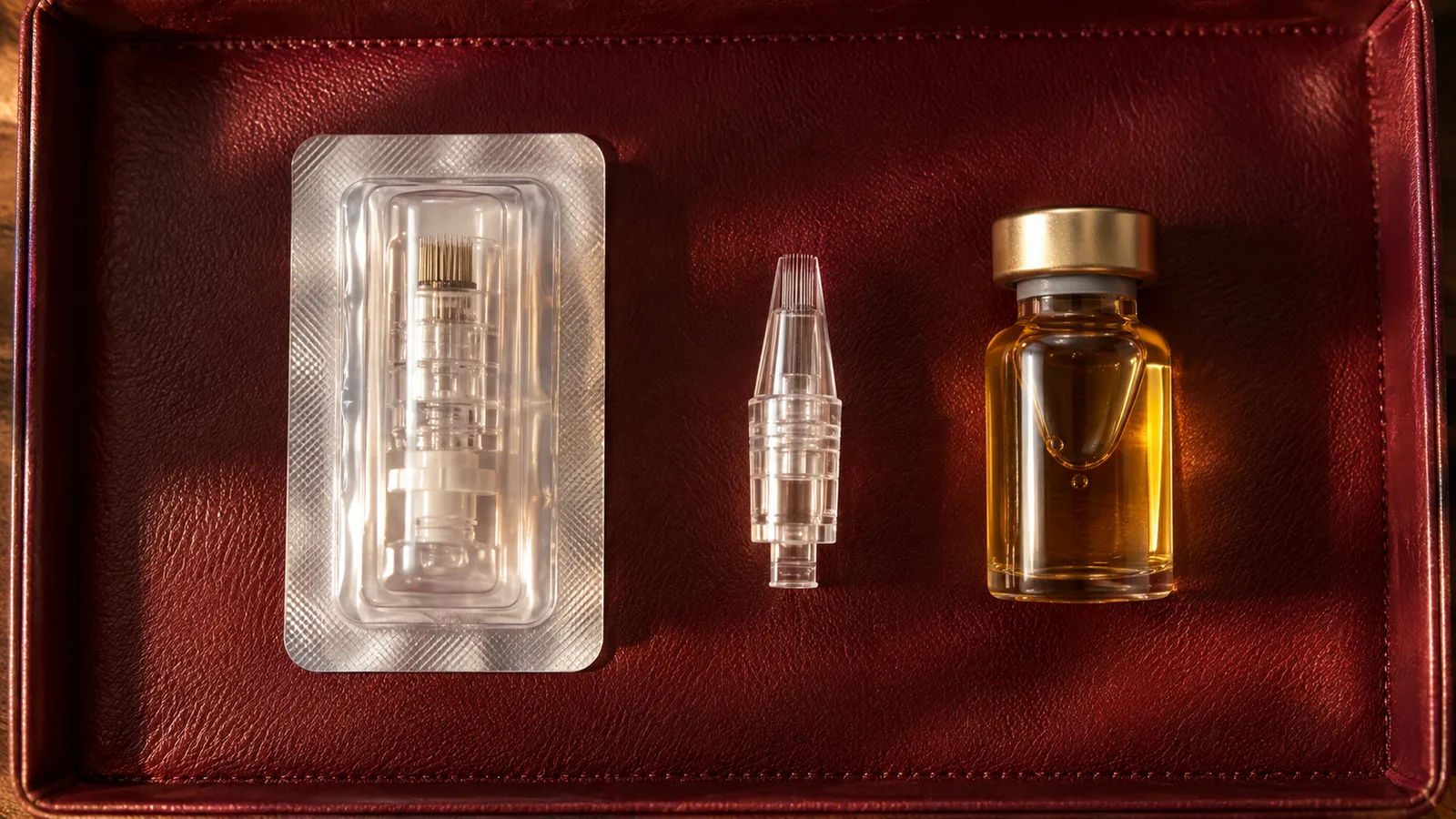
What moves the price
Whether radiofrequency is involved. This is the biggest single fork. Standard microneedling and RF microneedling are different treatments with different equipment, different downtime and substantially different pricing. A quote that doesn't specify which is a quote you can't use.
The area treated. Full face is the default. Adding the neck, the décolletage, or both, changes the number, and some practices quote the face and mention the rest afterward.
Add-ons. PRP applied alongside the needling, specific serums, LED afterwards, a numbing protocol. Some of these are included, some are itemised, and some appear at checkout. Ask which.
Who's holding the device. Practices with more clinical oversight generally price higher, and there's usually a reason for that even if it isn't visible on the price list.
Sessions in a package. Almost everyone sells a course at a lower per-session rate than a single. This is normal and often genuinely better value. It also locks you in, which matters more than people think.
The number to actually ask for
Not the session price. The course price, all in, with add-ons named.
Microneedling is a treatment that only works as a series. Three to six sessions, four to six weeks apart, is the ordinary shape. So the session price answers a question you don't have. The course price answers the real one, which is what this will cost between now and next spring.
Then ask the second question, which almost nobody asks: what does maintenance look like after the course, and what does that cost per year? Some plans want a session or two annually. That's fine if you know it going in and irritating if you find out at the end.
Between those two figures you've got the real cost. It's usually a bigger number than the one on the website and a more honest one.
Packages, and the part to be careful about
Buying a course up front is generally the cheaper route per session, and I'm not against it.
Two things to establish before you hand over money. What happens if you need to stop, for medical reasons or otherwise, and what happens if the practice closes or the practitioner leaves. Get both answers before you pay, ideally in writing. Prepaid packages are an ordinary part of this business and they're also the thing people write to me about when something goes wrong.
And don't buy a course on the basis of one session. Have the first one, see how your skin responds, see how the practice handles you, then commit. The saving on a package is rarely large enough to be worth being locked into the wrong practitioner.
Cheap quotes and what they usually mean
A noticeably lower price isn't automatically a worse treatment. Lower rent, a newer practitioner building a book, a quieter location: these are all real and all fine.
What to check is what's been removed. Fewer passes. One needle depth across the whole face instead of adjusting by area. A shorter appointment. No consultation, or a consultation that's really a booking call. A device you can't get a name for.
Ask what depth they're planning where, how many passes, and how long the appointment is. Those three answers tell you more about value than the price does, and a practitioner who's proud of their protocol will enjoy the question.
Judging value after the fact
The honest measure isn't how your skin looks the week after. It's how it looks three months after the last session, because that's when the collagen response has done its work.
Which means you won't know whether you got value until you've spent the whole course. That's uncomfortable and it's the reality of the treatment. It's also the argument for starting with a practice that gave you specific answers rather than the one that gave you the best per-session rate.
Take photographs yourself at the start, in the same light, on the same phone. You will not remember accurately, nobody does, and the practice's photos are taken to flatter.
Checking who you're dealing with
Before you prepay anything, spend ten minutes on the ordinary checks. Confirm the practitioner's license through the state lookup. Confirm the business is real and established, which the town's own website can start you on for anything registered locally.
If you want a quiet place to sit and compare two written quotes side by side, the West New York Free Public Library has tables and no sales pressure, and so does the study space at Hudson County Community College if you're connected to it. Comparing quotes on a desk is a very different exercise from comparing them from memory.
Get the course price, get the annual maintenance figure, and don't prepay a package until you've had one session.